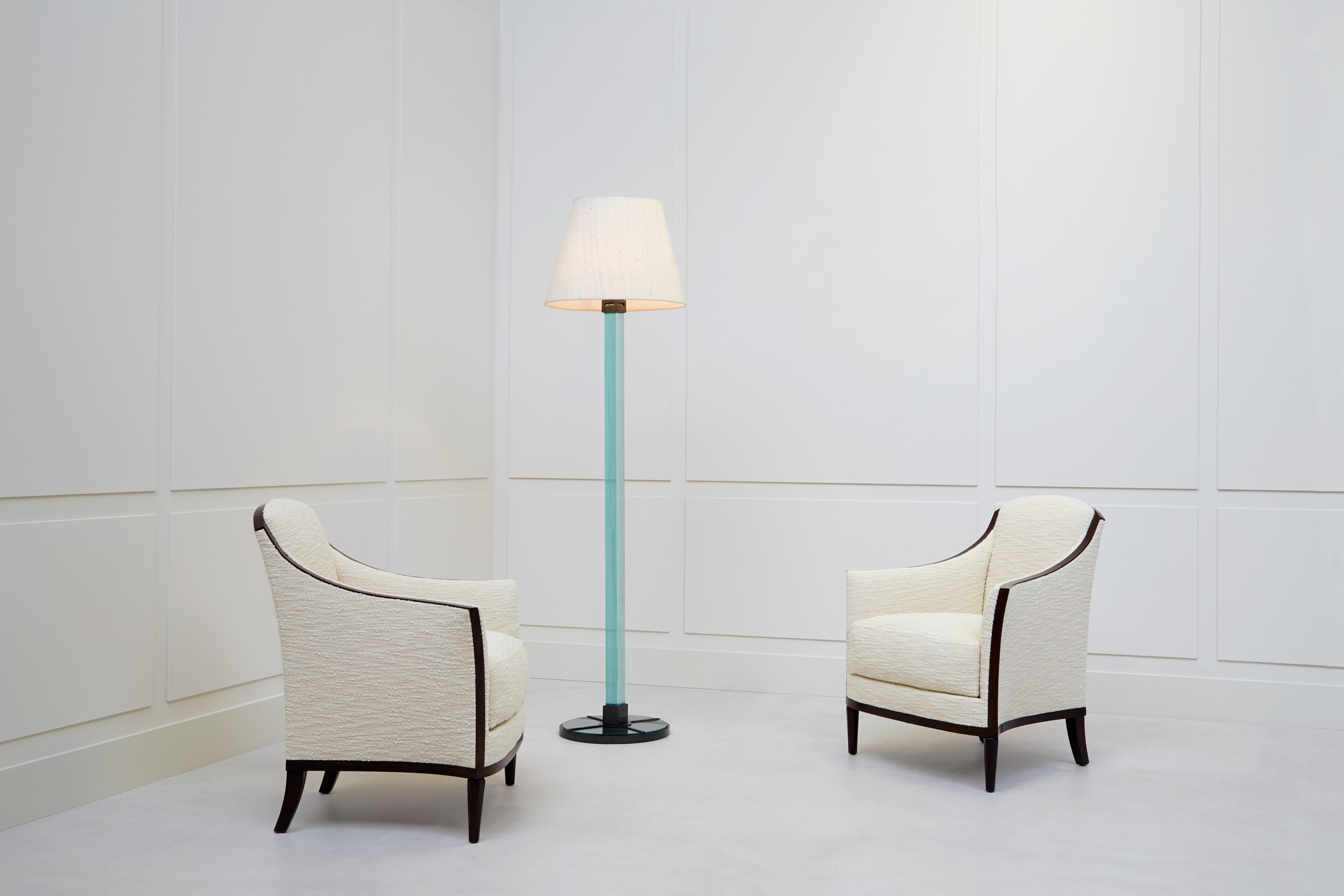
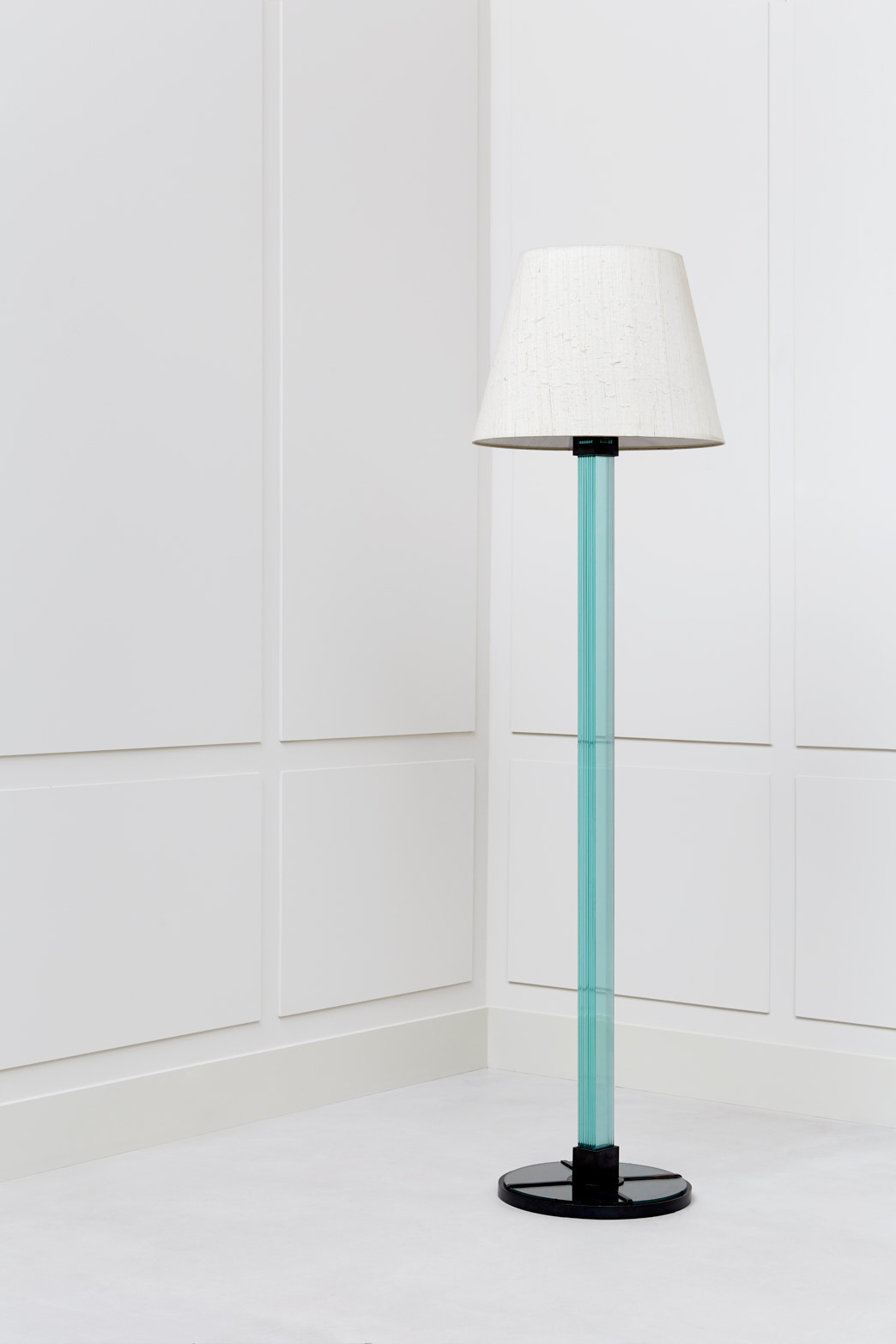
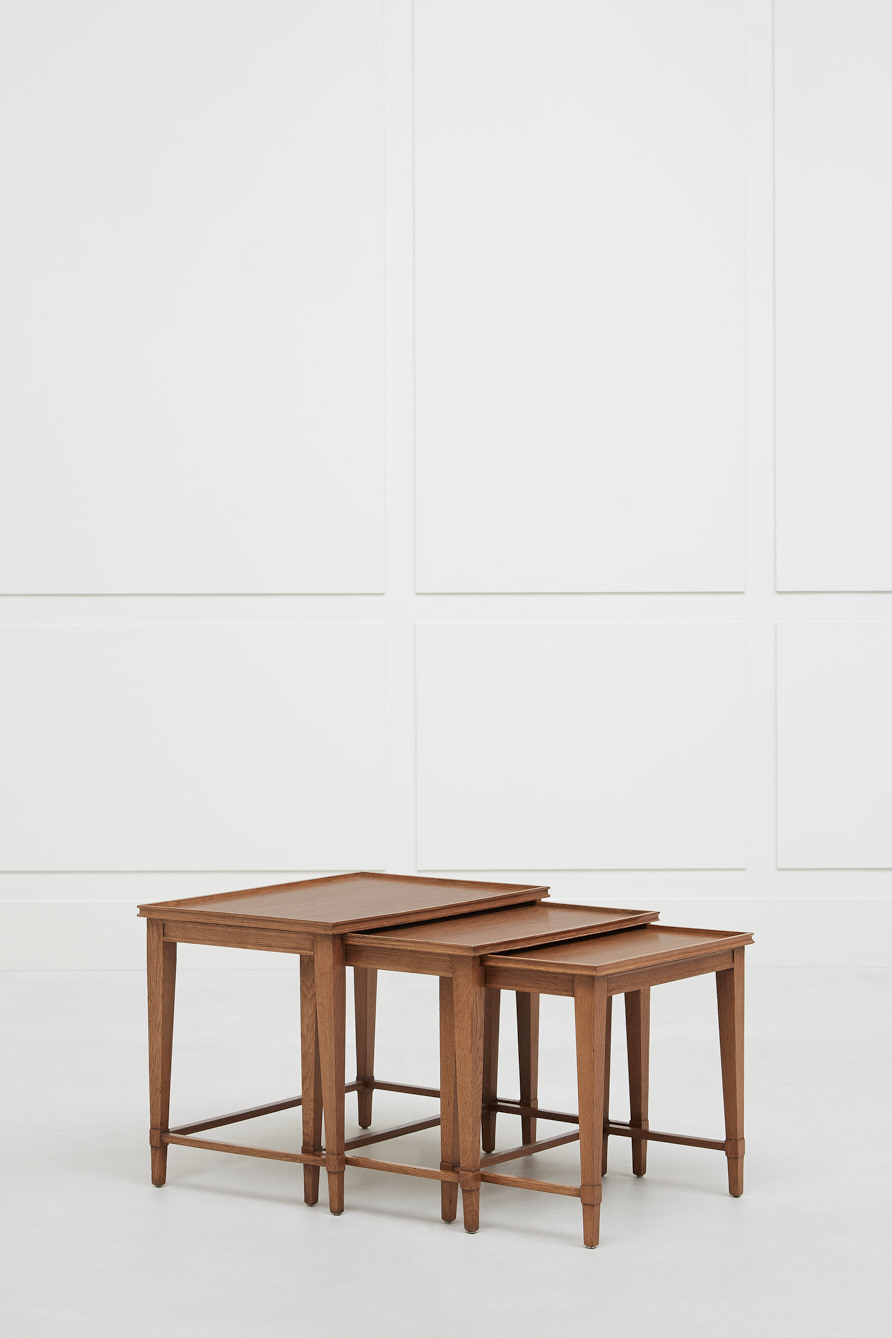
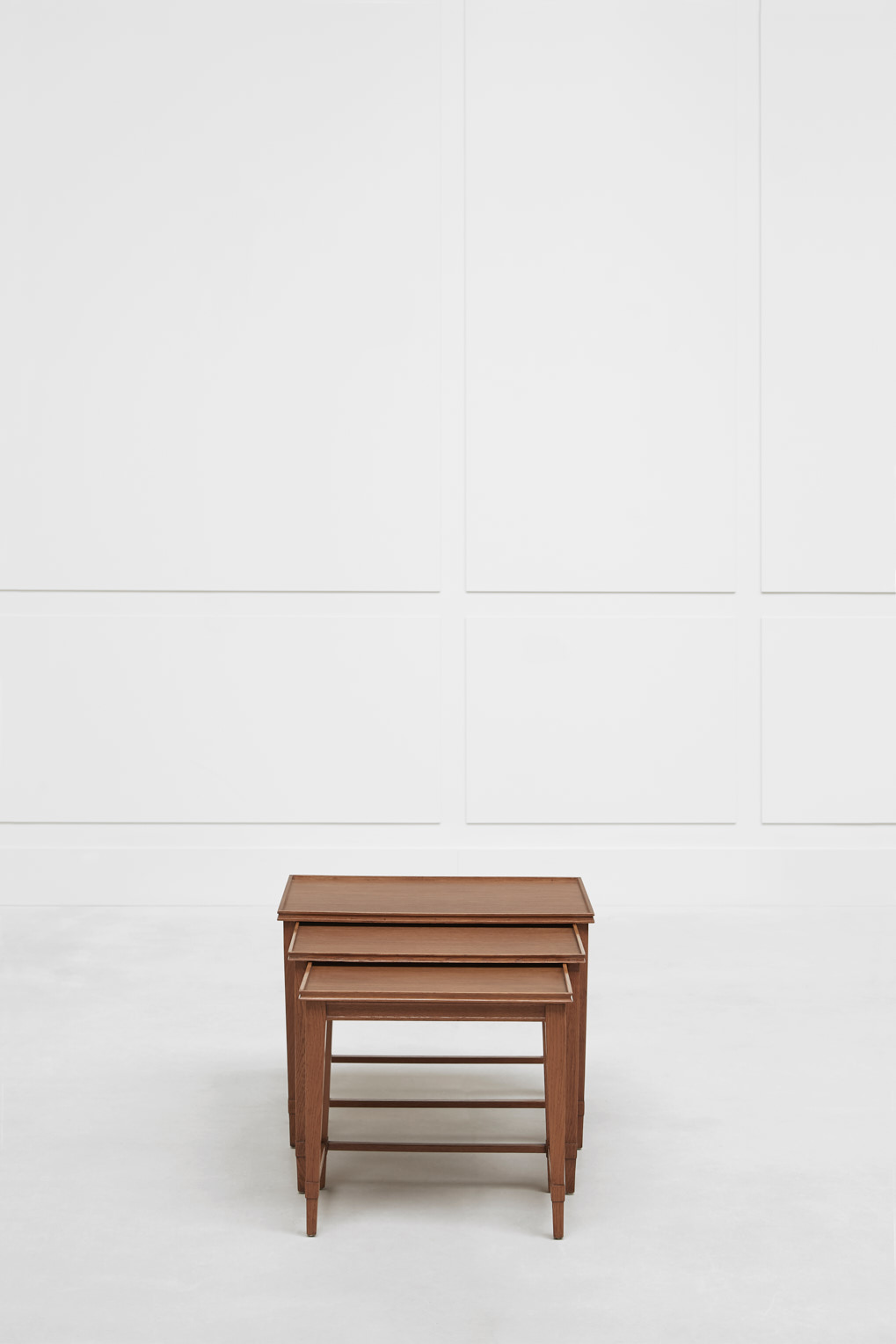
Jean-Michel Frank (1895-1941)
Born in 1895 in Paris, Jean-Michel Frank experienced the horrors of the First World War from a very young age.
At the end of the war, having substantial financial resources at his disposal, he quickly became part of Parisian high society and intellectual circles. There, Frank met the most prominent figures of the time, who would go on to become his first and most loyal clients.
Having initially trained in law with a view to entering the world of finance, Jean-Michel Frank ultimately chose to turn his hand to interior design in 1921. His first projects were for his friends Pierre Drieu la Rochelle and Charles Peignot.

View full biography
His style, characterised by formal simplicity and the use of original materials, set him apart from his contemporaries. Frank chose to banish objects from his interiors, retaining only pieces of furniture with clean, almost monastic lines. Spotted by the collectors Charles and Marie-Laure de Noailles and on the advice of their architect, the couple commissioned the young interior designer in 1925 to design the drawing rooms in their Parisian townhouse. Completed in 1926, this project was the subject of a major feature in the following year’s edition of Art et Industrie. Jean-Michel Frank was now counted amongst the leading Parisian interior designers.
Commissions came thick and fast from prominent figures such as the fashion designer Elsa Schiaparelli, the industrialist Robert Chevalier, the composer Cole Porter, and Nelson Rockefeller in New York…
Working in partnership with Chanaux on the design of his furniture, Jean-Michel Frank also commissioned exceptional pieces for his interiors from a number of artists: the first artist to collaborate with Frank was the sculptor Henri Laurens, whose works were mainly made of metal.
Alberto Giacometti, whom he met in 1928, created mainly bronze light fittings and plaster vases for him, finished in white, gold or black. The painter Christian Bérard designed patterns for Frank, which were then reproduced on carpets or tapestries. The architects Emilio Terry and Paul Rodocanachi were also part of the venture.
Jean-Michel Frank thus took on the role of conductor, placing these resolutely modern works within his minimalist interiors, characterised by perfect simplicity. The walls are clad in parchment, leather or whitewashed; the chairs are austere, with a neoclassical flair; the U-shaped tables are veneered with ivory or mica; and screens in straw marquetry add rhythm to the whole. Jean-Michel met the Surrealist painter Salvador Dalí, probably in 1930, at a dinner party at the Noailles’ home. Their collaboration mainly resulted in screens decorated by the painter, which could be found in Frank’s shop on Rue du Faubourg-Saint-Honoré from the moment it opened in 1935. The famous ‘Mae West’ sofa, shaped like a mouth, was also the result of their collaboration, as was our floor lamp in wood gilded with gold leaf, characterised by its great purity of form.
This same floor lamp can be seen in 1939 in Jorge Born’s home in Buenos Aires, which was one of Jean-Michel Frank’s final and most significant projects. This interior, regarded as the most accomplished expression of the designer’s aesthetic, brings together works by all his collaborators: in a large drawing room with parchment-clad walls are placed light fittings and vases by Giacometti, a few chairs by Rodocanachi and carpets woven from designs by Bérard. The smoking room contains pieces by Terry and Giacometti, as well as one of the screens designed by Salvador Dalí. Finally, in the library with its leather panelling, a number of light fittings punctuate the space, including the gilded wooden floor lamp designed by Salvador Dalí.
On his return to France, war was declared on Germany. Chanaux & Cie was forced to close its doors. In 1940, Jean-Michel Frank left France to settle in Buenos Aires, where he took over as artistic director of Comté.
In 1941, he travelled to New York, no doubt for professional reasons. Desperate at the news of this new war, Frank took his own life by throwing himself from a high-rise building.